One of the most common questions families have when they start thinking about building a custom home is: how do I actually pay for this while it's being built? You can't get a traditional mortgage on a home that doesn't exist yet. That's where construction loans come in — and understanding how they work is the key to approaching the build process with confidence instead of anxiety.
This guide breaks down the two main types of construction loans, how the draw process works, what lenders look for when they approve you, and what you can do right now to put yourself in the best position. No jargon, no fine print — just the information you need to walk into a lender's office ready.
"The families who get the best loan terms aren't the ones with the most money — they're the ones who prepared before they applied."
What Is a Construction Loan?
A construction loan is a short-term loan that funds the cost of building a home. Unlike a traditional mortgage — where you borrow against an existing property — a construction loan releases funds in stages called draws as your home is built. The lender doesn't hand you the full amount upfront. Instead, they verify that each phase of construction is complete, then release the next draw to your builder.
During the construction period, you typically make interest-only payments on the amount that's been drawn — not the full loan amount. This keeps your monthly payment manageable while the home is being built. Once construction is complete, the loan either converts to a permanent mortgage or is paid off with a new mortgage you take out at closing.
Traditional mortgages are secured by a finished property that a lender can appraise and, if necessary, foreclose on. An unfinished home has uncertain value and unfinished collateral — which is why lenders use a specialized loan structure for construction. Once the home is complete and a Certificate of Occupancy is issued, it can support a permanent mortgage like any other home.
The Two Types of Construction Loans
Most borrowers will choose between two approaches: a construction-to-permanent loan or a two-close loan. Here's how they compare:
A single loan that covers both the construction phase and the permanent mortgage. You close once, lock your rate upfront, and the loan automatically converts when the home is complete.
✔ Advantages- One closing — one set of closing costs
- Lock your permanent rate at the start
- Less paperwork overall — one approval process
- Streamlined: no second appraisal at the end
- Less risk if rates rise during construction
- Slightly stricter qualification requirements
- Rate lock may come with a fee for longer builds
- Fewer lenders offer this product locally
Two separate loan transactions: a construction loan to fund the build, then a traditional mortgage taken out at completion when the home is appraised at its finished value.
✔ Advantages- More lenders offer this option locally
- Flexibility to shop for the best permanent mortgage rate at completion
- If rates drop during construction, you benefit at the second close
- Can sometimes borrow more based on finished appraised value
- Two closings — two sets of closing costs
- Second approval required at completion (income, credit re-verified)
- Rate risk: if rates rise during construction, your permanent rate is higher
- More complexity and coordination
For most NEPA buyers building with a reliable, licensed builder on a 12–14 month timeline, the construction-to-permanent loan (C2P) offers the simplest path. The rate certainty and single closing are meaningful advantages. The two-close approach makes more sense if you expect rates to fall, or if you need the flexibility of re-qualifying for a larger permanent loan based on the finished appraised value.

Getting your financing right is the foundation everything else is built on.
How the Draw Schedule Works
The draw schedule is the heartbeat of a construction loan — it's the agreed-upon list of milestones at which funds are released from the lender to your builder. Understanding it protects you, your builder, and your lender, and prevents the most common friction points during a build.
Here's a typical draw schedule for a custom home build in NEPA:
| Draw # | Milestone | Typical % of Loan | What's Verified |
|---|---|---|---|
| Draw 1 | Foundation complete | 10–15% | Foundation walls poured, inspected, and backfilled |
| Draw 2 | Framing complete | 15–20% | All walls, roof structure, and sheathing in place; framing inspection passed |
| Draw 3 | Mechanicals rough-in complete | 10–15% | Plumbing, electrical, and HVAC rough-in inspections passed |
| Draw 4 | Drywall & exterior complete | 15–20% | Drywall hung and taped; roofing, siding, and windows installed |
| Draw 5 | Interior finishes substantially complete | 20–25% | Cabinets, flooring, and trim installed; paint substantially complete |
| Draw 6 | Certificate of Occupancy issued | 10–15% | Final inspections passed, CO issued, punch list complete |
| Total Disbursed | 100% | Loan converts to permanent mortgage (C2P) or is paid off (two-close) | |
Each draw requires an inspection — either by your lender's own inspector or a third party they hire — who confirms the milestone is legitimately complete before funds are released. This protects all parties: you don't pay for work that hasn't been done, and your builder gets paid promptly for work that has.
Draw inspections don't always happen overnight. Some lenders take 3–7 business days to schedule and complete an inspection after the builder requests a draw. If your builder is waiting on funds to pay subcontractors or order materials, this can create a chain-reaction delay on the build schedule. Ask your lender upfront what their typical draw inspection turnaround time is — and choose a lender with a track record of moving quickly.
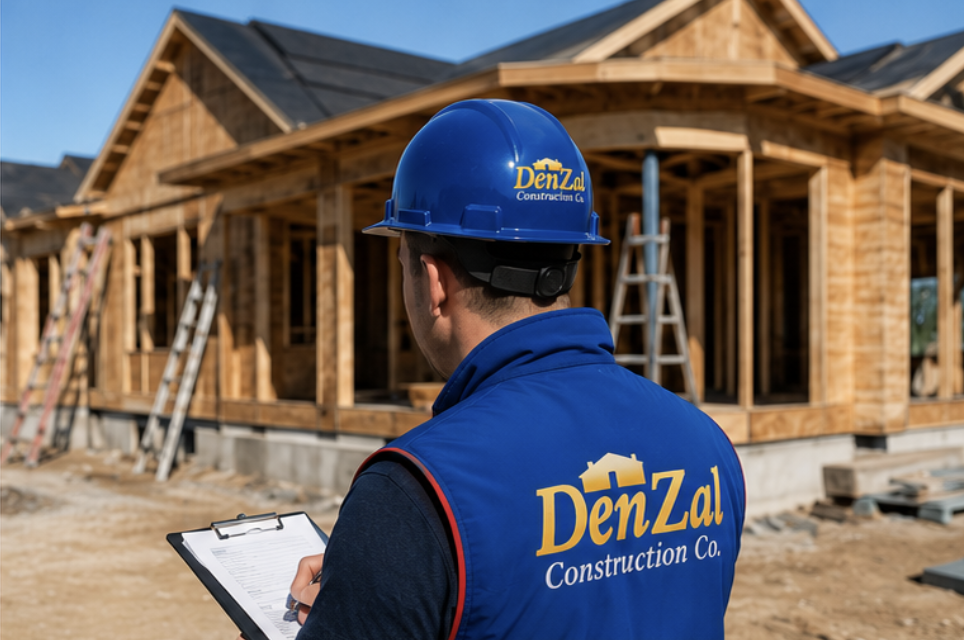
A draw inspection confirms each milestone is complete before funds are released to the builder.
What Lenders Look For
Getting approved for a construction loan is more involved than a standard mortgage. Lenders are taking on more risk — they're lending against a home that doesn't exist yet — so they scrutinize the borrower, the builder, and the plans more carefully. Here's what you'll need to qualify:
Your Financial Profile
- Credit score: Most construction loan lenders in NEPA require a minimum score of 680–700. Some programs (particularly FHA construction loans) allow lower scores, but conventional C2P loans typically require 700+.
- Down payment: Expect 10–20% down on the total project cost (land + construction). Some lenders allow equity in land you already own to count toward this.
- Debt-to-income ratio: Generally 43–45% maximum. Lenders calculate this based on your projected permanent mortgage payment, not the interest-only construction payment.
- Reserves: Many lenders want to see 2–6 months of mortgage payments in reserves after closing, in addition to your down payment.
- Stable income documentation: W-2s for the last 2 years, recent pay stubs, and tax returns. Self-employed borrowers will need 2 years of business returns and may face additional scrutiny.
Your Builder
Lenders don't just approve you — they approve your builder. A licensed, insured builder with a track record of completed projects is a significant positive. Lenders will typically require:
- Valid Pennsylvania contractor's license
- General liability insurance and workers' compensation
- Signed builder contract with fixed price and scope
- Builder's resume or portfolio of completed projects
- Some lenders require a builder approval process before they'll lend on a project
The Plans and Budget
- Complete architectural or working drawings
- Detailed cost breakdown from the builder (cost schedule or specs sheet)
- Lot details: address, parcel ID, deed or purchase agreement
- A contingency reserve — most lenders require 5–10% of the construction budget held in reserve for overruns
If you already own your lot free and clear, or have significant equity in land you're purchasing, many lenders will allow that equity to count toward your down payment requirement. This can substantially reduce the cash you need to bring to closing. Make sure your lender knows about owned land early in the process — it changes the calculation meaningfully.
The Construction Loan Timeline
From application to first draw, here's a realistic timeline for getting a construction loan in place for a NEPA build:
| Phase | Duration | What's Happening |
|---|---|---|
| Pre-qualification | 1–3 days | Lender reviews income, assets, and credit; issues a pre-qual letter |
| Full application + documentation | 1–2 weeks | Submit full package: financials, builder contract, plans, lot details |
| Lender underwriting | 2–4 weeks | Lender reviews all documents; orders appraisal and builder review |
| Appraisal | 2–3 weeks | "As-completed" appraisal based on plans and comparable finished homes |
| Conditional approval + clearing conditions | 1–2 weeks | Lender issues approval with conditions; you and builder provide remaining items |
| Closing | 1 day | Sign loan documents, pay closing costs, loan is funded |
| First draw request | After foundation complete | Builder submits draw request; lender inspects; funds released within 3–7 days |
| Total to first draw | 6–12 weeks from application, depending on lender and complexity | |
The takeaway: start the financing process before you're ready to break ground — not after. The appraisal and underwriting timeline means you should be talking to lenders at the same time you're finalizing your plans and builder contract, not after permits are approved.
Construction Loans in NEPA: What to Know Locally
Not Every Lender Offers Construction Loans
Construction lending is a specialty product. Not every bank or credit union in the region offers it, and among those that do, experience levels vary significantly. A loan officer who handles construction loans every week knows how to manage the draw process, the appraisal challenges, and the builder coordination that's required. One who handles one or two per year may create delays and confusion that affect your build schedule. Ask specifically how many construction loans the loan officer has closed in the past 12 months — and ask for a builder reference or two.
Local Community Banks and Credit Unions
In NEPA, community banks and credit unions are often more experienced with construction lending than large national banks. They tend to have more flexibility on underwriting, know the local market for appraisals, and have established relationships with local builders. Ask your builder who other clients have used — they'll know which lenders have been smooth to work with on draw inspections and which have created problems.
The "As-Completed" Appraisal
Unlike a standard appraisal on an existing home, a construction loan appraisal is based on what the home will be worth when it's finished. The appraiser reviews your plans and specs and compares them to recently sold comparable homes in the area. In NEPA markets, finding true comparables for custom new construction can be challenging — appraisers sometimes struggle to value a well-specified custom home against existing resale comps. Work with a builder who has detailed specs documentation to support the appraisal. Under-appraising is a real risk, and it affects how much the lender will fund.
Contingency Reserves
Most lenders require a 5–10% contingency reserve built into the construction budget. This money sits in a reserve account and can be drawn if costs exceed projections. If you don't use it, it typically reduces your permanent loan amount. Don't fight this requirement — it protects you. A build without a contingency is a build that's one price increase away from a problem.
Frequently Asked Questions
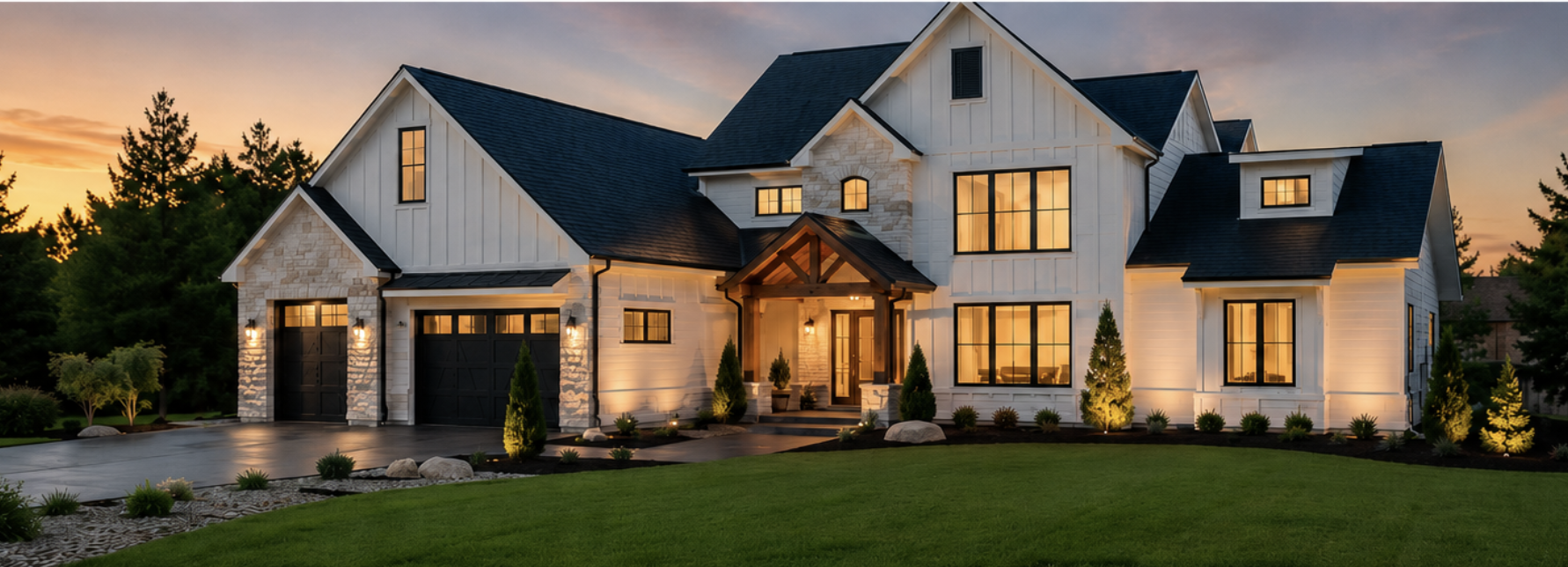
The loan is the tool. This is what it builds.
Before You Apply: Your Preparation Checklist
The families who move through the construction loan process most smoothly are the ones who show up organized. Here's what to have ready before you sit down with a lender:
- Last 2 years of federal tax returns (personal; business if self-employed)
- Last 2 years of W-2s or 1099s from all income sources
- Last 2–3 months of pay stubs
- Last 2–3 months of bank and investment account statements
- Documentation of any other assets (retirement accounts, real estate owned)
- Signed builder contract with fixed price and detailed scope of work
- Complete set of working drawings / architectural plans
- Builder's license number, insurance certificates, and portfolio
- Lot deed or purchase agreement (with parcel ID and legal description)
- Survey of the property (if available)
- Preliminary cost breakdown / construction budget from the builder
- Any existing mortgage statements (if you own a current home)
- Authorization to pull credit (lender will provide this form)
The Bottom Line
Construction loans are more complex than traditional mortgages, but they're not complicated once you understand the structure. A single loan, a clear draw schedule, an experienced lender, and a builder with a fixed-price contract — those four elements together make the financing side of a custom home build manageable and predictable.
The single biggest mistake families make is waiting too long to start the financing conversation. By the time your plans are finalized and permits are filed, your lender should already have your application in underwriting. The approval process takes time, and the last thing you want is a ready-to-go job site waiting on a bank.
DenZal Construction has worked through the construction loan process with dozens of NEPA families. We know which lenders are easy to work with and which create headaches, and we're happy to share what we've learned. If you're starting to think about building and want to understand the full financing picture — reach out. We'll walk you through it.