Data center proposals have reached more Northeastern Pennsylvania towns in the last two years than in the previous twenty. If you are buying a lot, building a home or buying an existing one, the question is no longer whether data centers matter. It is what you should check before you sign.
This guide is a checklist, not an argument for or against data centers. We build homes across Lackawanna County and the surrounding area, and these are the questions we now walk through with clients before they commit to land.
"A data center nearby is not an automatic deal-breaker, and it is not something to ignore. Treat it like a flood zone or a busy road: find out what is planned, how close it is, and what it changes about the property you want."
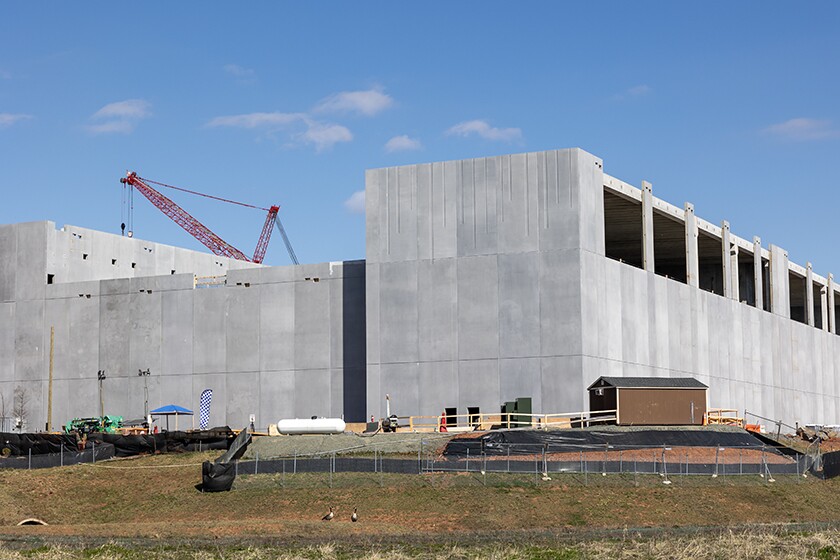
What is planned around a lot matters as much as the lot itself.
Why This Is a NEPA Question Right Now
Developers look for three things: large tracts of land, high-voltage power and fiber. Parts of Lackawanna County have all three, including access to the 500-kilovolt Susquehanna-Roseland transmission line. Local reporting through mid-2026 counted more than a dozen proposed campuses in the county, in Archbald, Dickson City, Clifton, Covington, Newton and Ransom among other places.
Most of those proposals have since been denied, withdrawn or tied up in appeals. That matters for buyers in two ways:
- A proposal is not a building. Many announced projects never break ground.
- A denial is not always final. Developers have appealed local decisions to county court, and a site that was turned down once can come back in a different form.
Project counts and approvals in this guide reflect local reporting through mid-2026. Check the current status of anything near a property you are considering. The checklist below shows you where to look.
Step 1: Find Out What Is Actually Planned
Do this before you make an offer on a lot or a home. Most of it is public record and costs nothing but time.
Step 2: Evaluate the Six Things That Change Daily Life
How much a facility affects a home depends on distance, terrain and the conditions the municipality attached to it. These are the six areas to ask about.
Cooling equipment runs around the clock and backup generators are tested on a schedule. Sound carries differently across a valley than across flat ground.
✔ Ask: What decibel limit does the ordinance set at the property line, is it lower at night, and who enforces it?Some cooling systems use very large volumes of water and others use little. The question matters most for homes on private wells.
✔ Ask: What is the project's water source, and what did my well yield test show?Large campuses often need new transmission lines and substations. A new line across the back of a lot changes the view and the buildable area.
✔ Ask: Are any new routes or easements planned on or next to this property?Building height matters most on the ridge-and-valley terrain we have here. Exterior lighting runs all night.
✔ Ask: What height, setback, berm and tree buffer rules apply, and must lighting be shielded?A multi-building campus can be under construction for years. This phase is often more disruptive than the finished facility.
✔ Ask: What is the truck route, what are the work hours, and is blasting planned?Large new loads raise fair questions about who pays for grid upgrades. In April 2026 the Pennsylvania PUC adopted a model tariff framework meant to keep those costs with large-load customers.
✔ Know: The framework is guidance for utilities, so watch how your utility applies it.
Step 3: Be Honest About Home Values
This is the question we hear most, and the honest answer is that nobody has good local data yet.
The study cited most often comes from George Mason University, which looked at 2023 home sales in Northern Virginia and found that homes closer to data centers sold for higher prices than homes farther away. The researchers pointed to the likely reason themselves: those data centers sit in well-planned, amenity-rich areas that buyers already want.
Northern Virginia has decades of sales history around smaller, suburban facilities. NEPA proposals are newer, often much larger, and often on rural or wooded land next to established neighborhoods. Do not assume the Virginia result carries over.
What you can do today:
- Ask for local comparables. A local appraiser or agent can tell you how homes nearest a proposed site have sold against similar homes elsewhere in town.
- Think about your time horizon. Uncertainty tends to weigh on prices most while a project is being fought over. If you plan to stay 15 years, short-term swings matter less than how the property lives day to day.
- Ask about taxes. A large commercial project can add to the municipal and school tax base. Whether that reaches homeowners depends on local decisions and any tax agreements, so ask and do not assume.
Step 4: If You Are Building, Design for It
When a lot is right in every other way, design choices can take most of the edge off a facility in the distance. Building new gives you options an existing home does not.
| Concern | What We Can Do in the Build |
|---|---|
| Noise | Place bedrooms and outdoor living on the quiet side of the house. Upgrade to laminated or triple-pane windows and denser wall insulation on the exposed side. |
| Light | Orient main windows and the primary suite away from the site. Keep or plant an evergreen buffer. |
| Views | Set the house on the lot so the garage or a wooded edge faces the site, and the porch or deck faces away. |
| Water | Test well yield early, and size the well and storage with margin. |
| Power Reliability | Rough in a whole-home generator or battery connection during construction, when it costs far less. |
Where bedrooms sit on the lot is easier to control in some layouts than others. See our guide to one-story vs. two-story homes.
Buying an Existing Home Instead?
Steps 1 through 3 apply the same way. Add three things:
- Ask the seller and the listing agent directly what they know about proposals nearby, and get the answer in writing.
- Have the well tested for yield as well as quality.
- Check the windows on the side facing the site. Replacing them is the most effective noise upgrade for an existing home.
Seven Questions to Ask Before You Sign
- Is any data center, substation or transmission project proposed, approved or under appeal within two miles of this property?
- What does the zoning allow on the large tracts nearest to it?
- What noise limit applies at the property line, and who enforces it?
- Where would the water and the power come from?
- What is the truck route during construction, and for how long?
- If I am on a well, what did the yield test show?
- How would I place a house on this lot to face away from the site?
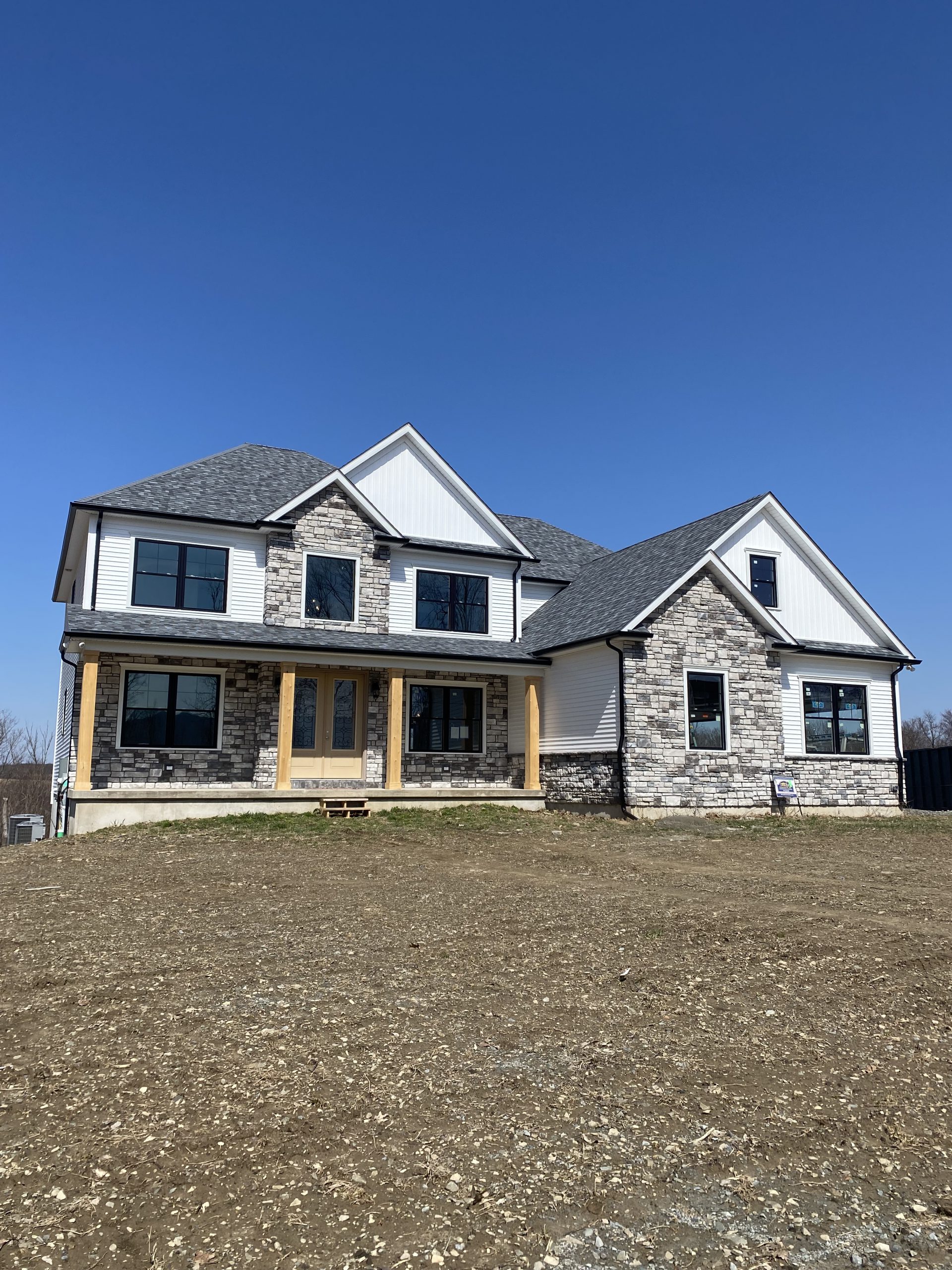
Land selection is the first decision, and the one you can't change later.
The Bottom Line
Data centers are now part of buying and building in NEPA. Some proposals will be built and many will not. The buyers who do well are the ones who look up what is planned, visit the lot at night, test the well and ask direct questions before they sign.
If you are looking at a lot, we are glad to walk it with you and tell you what we know about the land and what is around it.
- George Mason University, Schar School: home prices near data centers (2025)
- Pennsylvania PUC: large load model tariff framework (May 2026)
- WVIA: data center proposals in Lackawanna County (April 2026)
- Resilience: the data center showdown in Lackawanna County (June 2026)
This article is general information, not legal, real estate or appraisal advice. Proposals and regulations change often. Confirm the current status with your municipality.